
Critiquing Photography
Descriptive
This photograph is a good example of descriptive photography, as the sole purpose is to show you what the Dr Pepper looks like.

Interperative
This photograph by Francesca Woodman depicts interperative photography, as it shows a woman draped over a mirror. The photo is very mysterious and leaves the viewer open to many conclusions about its meaning.

Ethically Evaluative
This photograph by Lewis Hine depicts ethically evaluative photography as it documents the use of child labor in America during the early 1900s. With this photograph, Lewis Hine assisted in spreading awareness about this issue, and pushed a moral agenda to stop child labor.

Explainatory
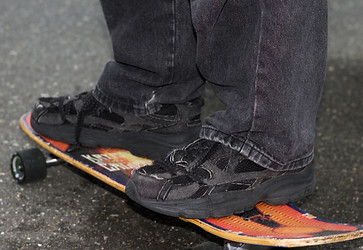
This photograph is a good example of explanatory photography, as it explains how to position your feet to ride a skateboard.
Aesthetically Evaluative
This photograph is a good example of aesthetically evaluative photography, as the sole purpose of this photo is to show the beauty of the decaying structure and be aesthetically pleasing to the viewer.

Theoretical
This photograph by Cindy Sherman is a good example of theoretical photography as it critiques women's portrayal in art, through art.

Photographed by: Francesca Woodman
Photographed by: Cindy Sherman
Photographed by: Ania Czajczynski
Photographed by: Ania Czajczynski
Photographed by: Ania Czajczynski
Photographed by: Lewis Hine
Synopsis
Sally Mann is an American photographer born in 1951 in Lexington, Virginia, whose work spans family portraiture, adolescence, and Southern landscape. Her early series At Twelve (1988) and Immediate Family (1992) captured childhood and adolescence in raw, unguarded moments using traditional gelatin silver prints. This work sparked national debate about documentary ethics and use of children in photography. In the mid-1990s, Mann shifted to landscape photography using 19th-century wet plate collodion, coating glass plates with chemicals and exposing them while still wet. The result is her Deep South series (1998–2004), becoming visual metaphors for the weight of Southern history. Mann's work falls under the aesthetically evaluative and interpretive categories; she isn't documenting facts so much as constructing mood and meaning. Her significance lies in her insistence on slowness and imperfection: in a digital age, she shoots on century-old equipment and accepts whatever the process gives her, because for Mann, those imperfections are exactly how a photograph holds memory.
Reflection
Before studying Mann's work, I thought of photography mostly as capturing a moment accurately. Looking at her Deep South images changed that. The streaks, hazes, and light flares from the wet plate process made me realize that imperfection can carry more meaning than a technically perfect shot. It shifted how I think about my own photography, especially in natural settings where the light and environment are unpredictable. Instead of trying to control everything, there's value in letting the process be part of the image.


